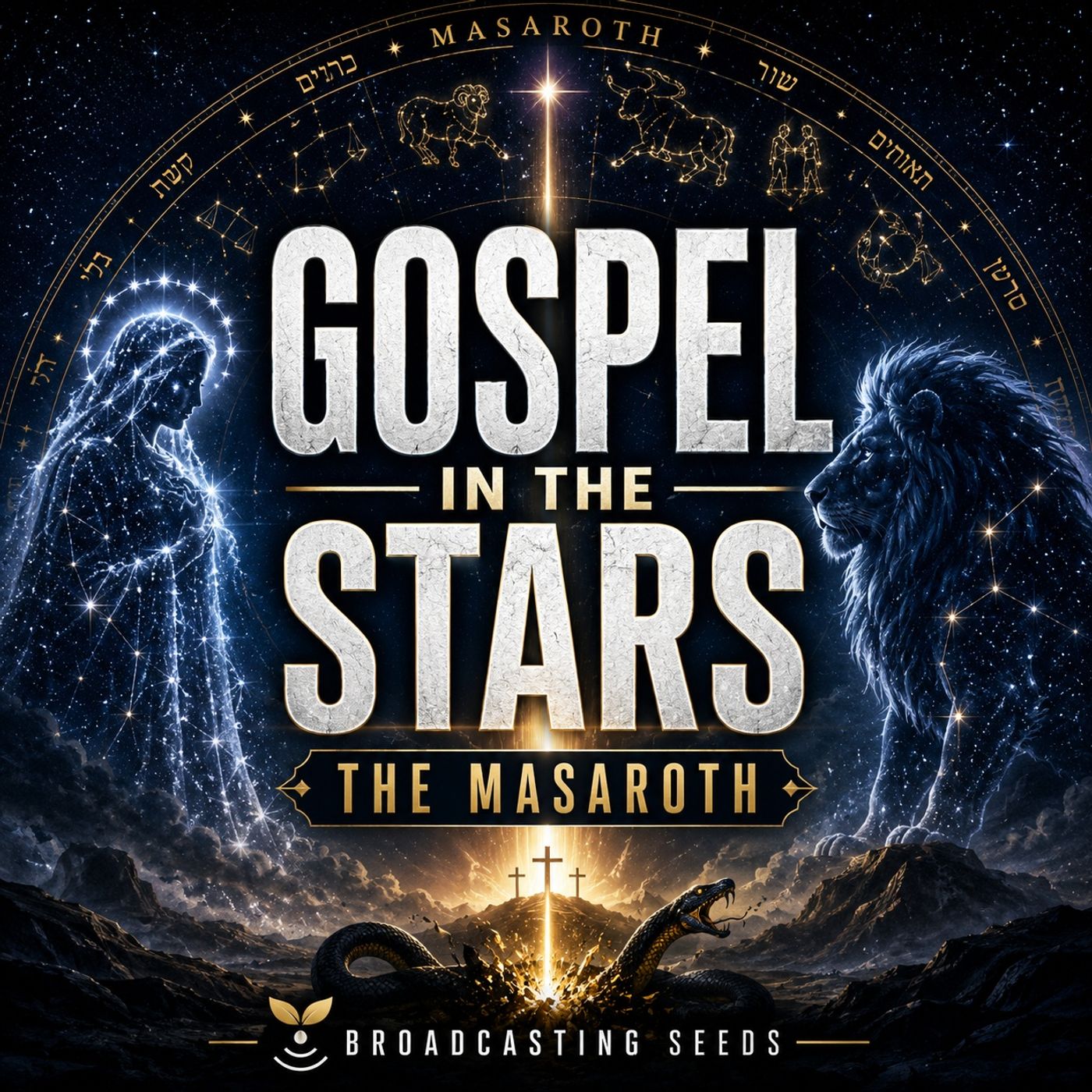
Decoding the Star Names: Evidence for a Sky-Written Gospel Before Scripture
Explore how ancient star names, far older than astrological interpretations, might hold linguistic clues to a primordial Gospel narrative. This post delves into the specific meanings and origins of star names, revealing how they align with a celestial story of redemption, predating written biblical texts.
Key Takeaways
- Ancient star names often carry meanings that align with a proto-Gospel narrative, suggesting a divine origin for celestial nomenclature.
- Linguistic analysis of star names, tracing back through Arabic and Semitic roots, reveals consistent themes of redemption, sacrifice, and victory.
- The presence of these proto-Gospel themes in star names predating Christianity challenges the idea that such interpretations are solely retrospective Christian readings.
- Specific stars and their associated constellations, like Regulus (the King) or Spica (the Branch), offer compelling examples of this celestial storytelling.
- This pre-scriptural celestial message served as a universal witness to God's plan, accessible to all cultures before the advent of written scripture.
Ancient Star Names as Divine Communication
The concept of a celestial narrative, a 'Gospel written in the stars,' is fascinating, but how do we move beyond broad interpretations of constellations to concrete evidence? One of the most compelling avenues lies not just in the patterns of stars but in their very names. Long before formal astrological systems, and even before the widespread dissemination of written scripture, it's argued that the names given to prominent stars carried inherent meaning, deliberately embedded by a Creator. This wasn't a random naming convention; rather, it's proposed as a divine act, a cosmic form of communication designed to tell a story – the story of redemption, conflict, and ultimate triumph that would later be fully revealed in scripture.
This perspective challenges conventional views that often dismiss ancient celestial lore as mere superstition or later Christian re-interpretations. Instead, it posits that the ancient Mesopotamians, Egyptians, and other early civilizations were recipients of a pre-existing divine language written in the heavens. The enduring power of these names, which have often been preserved through multiple linguistic layers (from ancient Semitic to Arabic and Greek), suggests a deep-seated meaning that transcends cultural shifts.
Consider the challenge: if these star names truly encode a narrative, where is the evidence? The argument centers on tracing these names back to their linguistic roots and uncovering their etymological meanings. This requires rigorous scholarship, often involving deciphering ancient texts and comparing variations of star names across different cultures. The consistency found in these meanings, particularly when aligned with the proposed narrative arc of the Gospel, becomes a powerful testament to the theory.
Linguistic Evidence from Star Names
The investigation into star names often takes us on a linguistic journey. Many familiar star names have Arabic origins, but these Arabic names frequently preserve older Semitic meanings, hinting at a much more ancient source. Scholars like Francis Rolston, whose work is often referenced in discussions of this topic, meticulously traced these etymologies. The findings are striking: common star names often translate to concepts like 'The Branch,' 'The Redeemer,' 'The Judge,' 'The Head of the Serpent,' or 'The King.'
For example, the star Regulus, a prominent star in the constellation Leo, has a name that directly translates from Latin as 'little king.' However, its ancient Semitic roots and associations point to a more profound meaning related to royalty and kingship, aligning with the Lion of Judah prophecy. Similarly, Spica, the brightest star in Virgo, carries meanings related to 'the seed,' 'the branch,' or 'the ear of corn,' directly linking to prophecies about the coming Redeemer and the fruit of the woman.
The constellation Libra, often depicted as scales, has been interpreted astrologically in various ways. However, its ancient Semitic name and associated meanings often point to 'the atonement' or 'the sacrifice,' a crucial element in any Gospel narrative. Even the seemingly challenging figures, like Scorpio, are seen to encode aspects of the conflict – the serpent's sting – while Sagittarius might represent the triumphant archer, and Capricorn the sacrificial goat.
The sheer volume of these consistent, Gospel-aligned meanings across numerous stars and constellations, found in languages and traditions that predate Christianity, forms the bedrock of the argument. It suggests that these were not arbitrary names but part of a deliberate, divinely inspired cosmic language intended to convey a fundamental message of hope and salvation.
Challenging Retrospective Interpretation
A primary objection to the 'Gospel in the Stars' theory is that it's a case of Christians retroactively imposing their narrative onto ancient celestial observations. The argument goes: why would ancient pagans or early civilizations name stars to tell a story they had no knowledge of?
However, the evidence suggests otherwise. The star names and constellation traditions themselves are often demonstrably older than Christianity. The Mesopotamians, for instance, had complex astronomical records and naming conventions long before the birth of Christ. The challenge is to demonstrate that the *meanings* embedded in these ancient names, even in their original contexts, align with the Gospel narrative. This is where the linguistic scholarship becomes critical.
Scholars point to the rigorous methodology of figures like E.W. Bullinger in 'The Companion Bible' and Joseph Seiss in 'The Gospel in the Stars.' They argue that the meanings are not imposed but uncovered. For instance, the meaning of 'the Branch' associated with Spica or the 'sacrifice' linked to Libra are not Christian inventions but are found in the etymological roots of the names themselves, which were in use by cultures long before Christianity.
Furthermore, the biblical text itself provides support for the idea of celestial communication. Job 38:32 asks, "Can you guide the Mazzaroth in their seasons?" implying a divine order and significance to these celestial arrangements. Psalm 19:1-4 famously states, "The heavens declare the glory of God; the skies proclaim the work of his hands." This verse suggests a divine message inherent in the cosmos, a message accessible to all humanity, not just those who received later scriptural revelation.
The argument is not that ancient civilizations fully understood the Christian Gospel in its entirety, but that the celestial markers, through their names and groupings, pointed towards key elements of a coming divine plan – a plan that Christianity ultimately fulfills. The star names act as pre-cursor whispers of a divine promise, echoing through millennia.
Specific Examples of Meaningful Star Names
Let's delve into a few more specific examples that illustrate the depth of this theory:
- Virgo (The Virgin) and Spica (The Seed/Branch): The constellation Virgo is often depicted as a woman holding a sheaf of wheat or an ear of corn. Spica, its brightest star, has roots meaning 'seed' or 'fruit,' and also 'branch.' This strongly aligns with prophecies concerning a virgin birth and the coming seed of the woman (Genesis 3:15) who would bring redemption.
- Libra (The Scales/Atonement): While commonly seen as scales, ancient interpretations link Libra to 'the price paid' or 'the atonement.' This resonates with the concept of sacrifice and redemption, where a price must be paid to reconcile humanity with God.
- Scorpio (The Serpent/Struggle): This constellation often depicts a scorpion or serpent. Its prominent stars have names that can be interpreted as 'the enemy,' 'the opposition,' or 'the sting.' This aligns with the serpent mentioned in Genesis 3, representing the ongoing cosmic battle and the 'serpent's sting' that the Redeemer would overcome.
- Sagittarius (The Archer/Conqueror): Depicting an archer aiming his bow, Sagittarius signifies conquest and victory. Star names within this constellation can translate to 'ruler,' 'judgment,' or 'victory,' pointing to the triumphant aspect of the Redeemer who overcomes all opposition.
- Capricorn (The Sacrificial Goat): This often-misunderstood constellation depicts a sea-goat. However, its ancient meanings are strongly tied to sacrifice and atonement, with star names suggesting 'the sin-offering' or 'the suffering creature.' This is seen as a representation of the substitutional sacrifice central to the Gospel.
- Leo (The Lion/Tribe of Judah): Leo is consistently linked to royalty and strength. The star Regulus, meaning 'little king,' reinforces this. The constellation represents the coming Lion of the tribe of Judah (Revelation 5:5), the ultimate King and Conqueror.
These are just a few examples, but the pattern is extensive, covering most of the zodiacal constellations and many prominent stars. The cumulative weight of this evidence, when analyzed through linguistic and historical scholarship, presents a compelling case for a divinely intended celestial narrative that predates and prepares the way for the written scriptures.
The Creator's Intent in the Cosmos
The theory that God wrote a Gospel in the stars is not about promoting astrology, which is often seen as a corruption of this original celestial language. Instead, it’s about recognizing a potential primordial revelation embedded in the fabric of creation itself. The ancient star names, when studied with a critical yet open mind, offer a unique lens through which to view this possibility.
They suggest that even before the Law was given on Mount Sinai, before the prophets penned their words, and before the Gospels were written, there was a cosmic witness to God's redemptive plan. This 'sky-written story' was a universal message, observable by all cultures, a constant reminder of the promise of a coming Savior and the ultimate triumph of good over evil.
Understanding these ancient meanings can profoundly deepen our appreciation for the Bible's narrative. It suggests a continuity of divine communication from the very beginning, demonstrating God's consistent intention to reveal Himself and His plan for humanity. It’s a perspective that invites us to look up at the night sky not just with wonder at its beauty, but with a sense of profound meaning and a recognition of an ancient, celestial testament.
To dive deeper into this fascinating topic and hear a comprehensive exploration of the Masaroth, the Zodiac, and God's sky-written story, be sure to Listen to the full episode.
Frequently Asked Questions
How do ancient star names support a Gospel narrative?
Ancient star names, traced back through linguistic roots, often carry meanings such as 'the branch,' 'the Redeemer,' 'the sacrifice,' or 'the king.' These meanings align directly with key themes and prophecies found within the Gospel message, suggesting a pre-scriptural celestial encoding of these concepts.
What is the difference between the Masaroth and modern astrology?
The Masaroth, in this context, refers to the ancient, divinely intended meanings of constellations and star names as a celestial testimony. Modern astrology, on the other hand, is often seen as a later, corrupted interpretation that uses these celestial bodies for personal prediction and divination, divorced from their original, theological purpose.
Can you provide an example of a star name with a Gospel meaning?
Certainly. The star Spica, the brightest star in Virgo, has ancient roots suggesting 'the seed' or 'the branch.' This directly correlates with biblical prophecies about the coming Redeemer, often referred to as the 'seed' of the woman or a 'branch' from Jesse's lineage.
Is the idea of a sky-written Gospel supported by the Bible itself?
Yes, biblical passages like Job 38:32 and Psalm 19:1-4 suggest that God authored and ordered the constellations (Mazzaroth) and that the heavens declare His glory. This implies a communicative and intentional aspect to celestial bodies, which proponents of the sky-written Gospel theory interpret as a form of divine revelation.