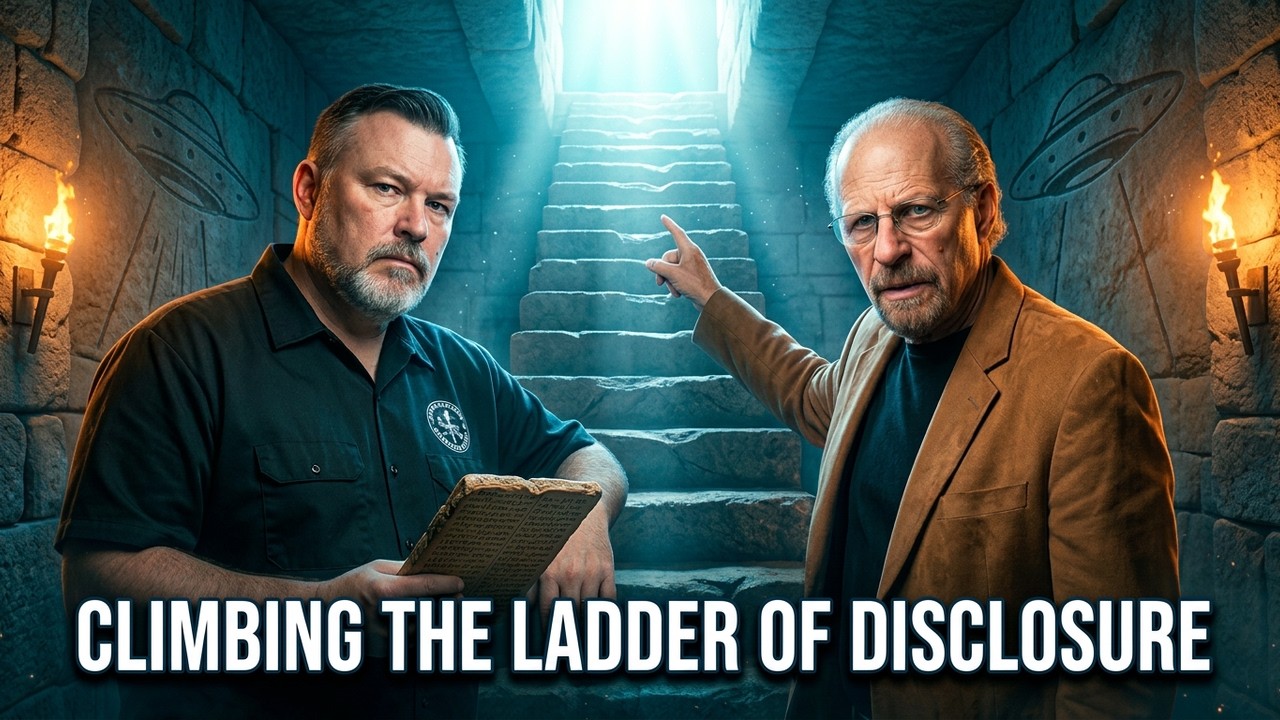
Spielberg's 'Close Encounters' and the Conditioning for UFO Disclosure
This post explores how Steven Spielberg's iconic film "Close Encounters of the Third Kind" may have played a significant role in preparing the public for the idea of alien contact, acting as a precursor to modern UFO disclosure narratives and potentially influencing our acceptance of non-human intelligence. We delve into the specific themes and imagery used in the film and how they align with current discussions about UAP disclosure.
Key Takeaways
- Steven Spielberg's films, particularly "Close Encounters of the Third Kind," are examined as potential tools for cultural conditioning regarding alien contact.
- The film's portrayal of benevolent, communicative aliens may have softened public perception and made acceptance of non-human intelligence more palatable.
- Marzulli suggests that cinematic narratives like Spielberg's can act as a deliberate rollout of information, shaping public opinion ahead of official disclosure.
- The film's focus on a spiritual or transcendent aspect of contact, rather than purely technological, mirrors some of the deeper implications discussed in relation to UAP phenomena.
- This conditioning may be part of a larger strategy to prepare humanity for an acceptance of 'non-human intelligence' as a source of truth and authority.
Spielberg's Early Warning System
In the landscape of UFO disclosure, the role of popular culture cannot be overstated. While government reports and scientific inquiries often dominate the headlines, it's the narratives woven into our shared consciousness through film that can truly shift public perception. In the latest episode of The Broadcasting Seeds Podcast, "The Rungs of Disclosure: L.A. Marzulli on Aliens, Angels & the Days of Noah," L.A. Marzulli touches upon the significant influence of Steven Spielberg's cinematic work, particularly "Close Encounters of the Third Kind," in paving the way for the current era of UAP disclosure.
Marzulli posits that films like "Close Encounters" weren't just entertainment; they were, in essence, a sophisticated form of cultural conditioning. By presenting a vision of alien contact that was less about invasion and more about profound, almost spiritual, encounters, Spielberg may have been instrumental in acclimatizing the public to the very idea of alien intelligence interacting with humanity. This preemptive cultural work, according to Marzulli's analysis, makes the subsequent waves of government interest and public discussion around UAPs feel less jarring and more like a natural progression.
The Narrative of Benevolent Contact
What made "Close Encounters of the Third Kind" so impactful was its departure from typical sci-fi tropes of hostile alien invaders. Instead, it presented extraterrestrials as beings of immense power and curiosity, capable of communicating and offering a glimpse into something beyond human understanding. The film's depiction of the aliens as almost divine messengers, arriving with a message and a purpose, resonated deeply with audiences and planted seeds of wonder rather than fear.
This portrayal, Marzulli suggests, served to soften the ground for a more accepting public when stories of UFO sightings and government interest began to gain more traction. The idea of 'non-human intelligence' moved from the realm of the bizarre and frightening to the potentially wondrous and enlightening. This shift in perception is crucial, as it aligns with the broader theme Marzulli discusses: humanity being conditioned to accept these intelligences as sources of truth, authority, and even salvation, without the need for traditional repentance or spiritual frameworks.
Shaping Public Perception Through Cinematic Themes
The strategic use of film in shaping public opinion is a powerful, albeit often subtle, force. Marzulli points out how specific elements within Spielberg's filmography, and the trailers accompanying them, hint at a deliberate narrative being crafted. The visual language, the emotional arcs, and the overarching themes of seeking contact and understanding all contribute to a collective mindset. "Close Encounters," in particular, with its emphasis on the pursuit of a higher truth and the profound impact of contact, has undeniably influenced how generations have thought about the possibility of life beyond Earth.
This isn't to say that Spielberg was acting as a direct agent of some clandestine disclosure program, but rather that his artistic vision tapped into and amplified a growing cultural fascination. His storytelling prowess, combined with the accessibility of the cinematic medium, created a widespread familiarity with the concept of alien visitation. This familiarity is precisely what is needed for any large-scale disclosure to be accepted without mass panic or disbelief.
Disclosure as a Coordinated Rollout
The idea that elements of UFO disclosure might be a "coordinated rollout" is a recurring theme in Marzulli's work, and his discussion in this episode brings a fascinating angle by linking it to cultural influences like Spielberg's films. The gradual release of UAP files by governments, the increasing media attention, and the framing of these events in popular culture can be seen as interconnected parts of a larger strategy. Films like "Close Encounters" can be viewed as early stages of this strategy, introducing the core concepts and emotional frameworks necessary for public acceptance.
Marzulli's assertion is that this isn't just happening organically; there's an underlying orchestration. The conditioning happens not just through official channels but through the stories we consume and cherish. By making the idea of alien contact feel less like a fringe theory and more like a potential, even desirable, reality, these cultural touchstones prepare us for what might be presented as official truth. The readiness to accept 'non-human intelligence' without the baggage of potentially unsettling spiritual or religious implications is a key outcome of this conditioning.
Beyond Tech: The Spiritual Dimension
A critical aspect of Marzulli's perspective, as highlighted in the episode, is that disclosure may not be purely technological. While UAP phenomena often center on advanced craft and potential governmental cover-ups, the deeper implications, as explored in the podcast, lean towards the spiritual. The conditioning facilitated by films like "Close Encounters" can also be seen as preparing us for this spiritual dimension. The sense of awe, the search for meaning, and the transformative potential of contact are all elements that resonate with spiritual narratives.
This resonates with the biblical warnings of deception that Marzulli discusses. If the ultimate goal is to condition humanity to accept non-human intelligence as a form of salvation, then the narrative needs to be compelling and psychologically palatable. Presenting aliens as benevolent or mysterious entities, as seen in Spielberg's work, achieves this by bypassing the potentially challenging and confrontational aspects of traditional religious or spiritual doctrines. It offers a 'new' paradigm that feels progressive and exciting, aligning with the idea of humanity evolving to a new stage of awareness, rather than confronting spiritual truths or warnings.
The conditioning for spiritual shift, as described by Marzulli, is a process that aims to make humanity receptive to external solutions and authorities that bypass traditional spiritual paths. Films like "Close Encounters of the Third Kind" contribute to this by framing alien contact as a potentially transformative, almost messianic event. This gradual acclimation, fueled by captivating storytelling, is a powerful force in preparing the collective consciousness for a future where the lines between the technological, the extraterrestrial, and the spiritual become increasingly blurred.
The conversation in "The Rungs of Disclosure" goes much deeper into the implications of this conditioning and the ancient prophecies that seem to be unfolding today. It challenges listeners to consider the spiritual underpinnings of the UFO phenomenon and the importance of discernment in an age of increasing deception. Listen to the full episode to explore L.A. Marzulli's compelling insights on these profound topics and prepare yourself for what might be coming.
Frequently Asked Questions
How did "Close Encounters" influence UFO disclosure?
"Close Encounters of the Third Kind" influenced UFO disclosure by portraying alien contact in a way that was awe-inspiring and benevolent rather than terrifying. This helped to condition the public to be more open and accepting of the idea of extraterrestrial intelligence, making later discussions and official reports on UAPs feel less radical.
Did Spielberg intentionally condition the public?
While it's unlikely Steven Spielberg had a direct mandate for government disclosure, his films tapped into and amplified a growing public fascination with UFOs. The themes in "Close Encounters" align with what L.A. Marzulli describes as cultural conditioning, suggesting his artistic vision played a role in preparing audiences for the possibility of alien contact.
What is the spiritual dimension of UFO disclosure?
L.A. Marzulli argues that UFO disclosure may have a significant spiritual component, potentially involving fallen angels or deceptive non-human intelligences. Films like "Close Encounters" might serve to prepare people for this by framing alien contact as a transformative, almost spiritual, event, thereby making acceptance of such intelligences as authorities or saviors more palatable.
How do films prepare us for non-human intelligence?
Films prepare us for non-human intelligence by familiarizing audiences with the concept, often presenting it in a non-threatening or even positive light. They can shape our emotional responses and preconceived notions, making the idea of contact less alien and more of a potential future reality, thus lowering resistance to disclosure narratives.