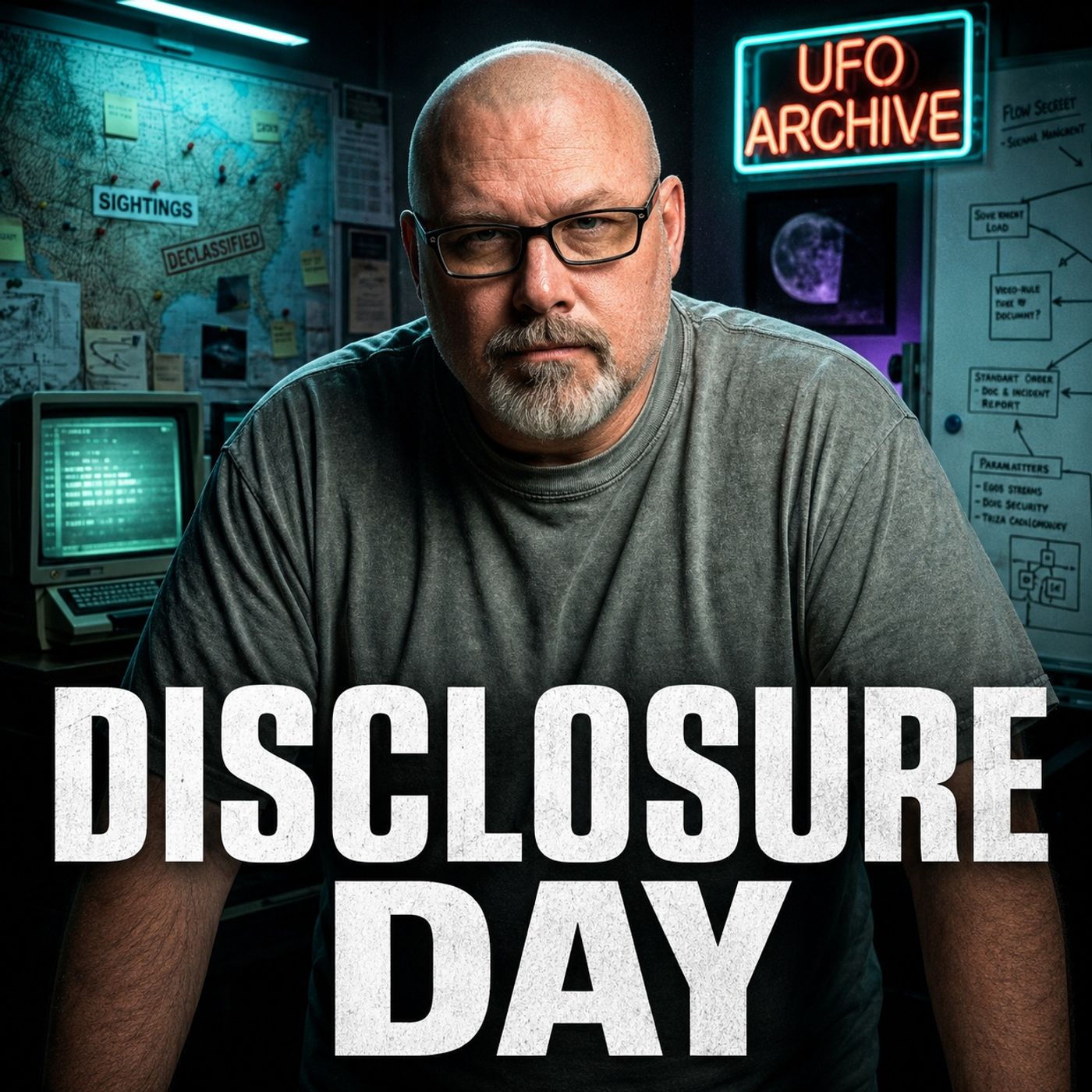
Apocalypse as Unveiling: Are We Socially Prepared for Disclosure?
The true 'apocalypse' of Disclosure Day isn't destruction, but the profound societal unveiling of reality. This article delves into whether humanity possesses the collective readiness to process seismic truths, exploring the delicate balance between revelation and reception, and the readiness for disclosure.
Key Takeaways
- The term 'apocalypse' in the context of disclosure signifies an 'unveiling' of reality, not necessarily physical destruction.
- Societal readiness is the paramount factor determining how humanity will process significant revelations.
- Historical paradigm shifts demonstrate humanity's inherent resistance to fundamentally disruptive truths.
- Information saturation and pervasive skepticism today complicate our preparedness for disclosure.
- A critical examination of our psychological and cultural 'readiness' is essential for navigating a post-disclosure world.
The Semantics of Apocalypse: Unveiling vs. Destruction
The popular imagination often associates 'apocalypse' with cataclysmic destruction, a Hollywood-fueled vision of societal collapse and global devastation. However, the etymology of the word, derived from the ancient Greek 'apokalypsis,' offers a far more profound and relevant interpretation: 'unveiling' or 'revelation.' This distinction is crucial when considering the hypothetical event of 'Disclosure Day.' Instead of focusing on the end of the world as a destructive force, we must contemplate the end of our *current understanding* of the world. Disclosure, in this light, represents the irreversible lifting of a veil that has obscured fundamental truths about our existence, our history, and our place within the grand tapestry of the cosmos. It is not a scenario of fiery endings, but of a profound and unavoidable recontextualization of everything we have held to be true. The 'apocalypse,' then, becomes the precise moment when our accumulated ignorance is replaced by illuminating knowledge, shattering deeply ingrained illusions and demanding the construction of an entirely new framework for comprehending reality. The pivotal question evolves from 'Will the world end?' to 'Will our perception of the world survive the truth?' This reframing underscores the psychological and societal hurdles we face, highlighting that the greatest challenge may not be the disclosure itself, but our collective capacity to integrate its implications without succumbing to existential crisis.
Societal Readiness: The Critical Filter for Disclosure
The actual impact of any monumental unveiling, particularly one concerning extraterrestrial intelligence or hidden aspects of reality, is dictated not solely by the nature of the revelation itself, but more significantly by the preparedness of the society tasked with receiving it. The crucial question becomes: are we, as a global collective, sufficiently prepared psychologically, culturally, and perhaps even spiritually to assimilate truths that possess the potential to fundamentally reshape our entire worldview? Consider the intricate balance required for such an event. An influx of profound truths, delivered too rapidly and without adequate societal preparation, could very well trigger widespread panic, debilitating existential dread, or even societal fragmentation, paradoxically manifesting the very destruction that the initial fear anticipated. Conversely, a society thoroughly steeped in a culture of pervasive skepticism and deep-seated distrust might actively reject or dismiss even the most irrefutable evidence, perpetuating a state of collective ignorance and forfeiting invaluable opportunities for intellectual and existential growth. Our current global milieu, characterized by an unprecedented saturation of information, the rapid dissemination of misinformation, and a general erosion of trust in institutions, presents a complex and challenging landscape for the concept of disclosure. This environment fosters an inherent resistance to paradigm-shifting revelations, making the assessment of our societal readiness not merely an academic exercise but an urgent necessity. The 'apocalypse as unveiling' thus hinges on this critical filter of societal readiness, determining whether disclosure leads to enlightenment or chaos.
Historical Precedents: Humanity's Struggle with New Truths
Throughout history, humanity has grappled with revelations that fundamentally challenged existing paradigms, often meeting them with resistance, denial, or fear. The Copernican revolution, which displaced Earth from the center of the universe, faced immense opposition from established religious and scientific authorities, illustrating a deep-seated human tendency to cling to familiar frameworks even when confronted with compelling evidence. Similarly, the discovery of evolution by natural selection threatened deeply held beliefs about creation and humanity's place in the natural order, sparking centuries of debate and often bitter controversy. These paradigm shifts, while ultimately leading to advancements in understanding, were met with significant societal friction. They reveal a pattern of human behavior: a reluctance to abandon established certainties, a preference for the known over the unknown, and a fear of the implications that radical new truths might bring. If history serves as any guide, the unveiling of profound truths about our universe and our place within it would likely trigger a similar, perhaps even amplified, wave of cognitive dissonance and societal upheaval. The speed and scale of potential disclosure in the modern era, coupled with our interconnected global society, could make adaptation even more challenging. Understanding these historical struggles is not about predicting doom, but about recognizing the deep-seated psychological mechanisms that govern our response to the unknown and the potentially disruptive. This historical perspective is vital for assessing our current 'societal readiness' for the ultimate unveiling, highlighting the critical need for education, open dialogue, and psychological preparedness to navigate such a transformative event. The 'apocalypse as unveiling' requires us to confront not just external truths, but our internal resistance to them.
The Role of Information and Skepticism in Disclosure Readiness
In the digital age, information flows with unprecedented speed and volume. While this offers the potential for rapid dissemination of knowledge, it also creates fertile ground for misinformation, disinformation, and a pervasive culture of skepticism. When considering 'Disclosure Day' and the concept of 'apocalypse as unveiling,' this information landscape plays a critical role in determining our societal readiness. On one hand, the internet allows for swift global communication, potentially enabling a more unified response to disclosure. Educational resources, diverse perspectives, and community discussions can be accessed instantly, fostering a more informed populace. However, the same channels that disseminate truth can also amplify doubt and conspiracy theories. The sheer volume of conflicting narratives makes it difficult for individuals to discern fact from fiction, leading to a generalized distrust of information sources, including potentially credible announcements about disclosure. This pervasive skepticism, while sometimes a healthy critical faculty, can become a significant barrier when genuine, verifiable evidence emerges. If people are conditioned to disbelieve authoritative sources or to seek out fringe explanations for everything, they may dismiss even the most significant revelations as hoaxes or elaborate deceptions. Therefore, fostering media literacy, critical thinking skills, and a more discerning approach to information consumption are paramount steps in preparing society for disclosure. We must learn to navigate this complex information ecosystem, differentiating between constructive skepticism and outright denial, to ensure that the 'unveiling' of truth can lead to genuine understanding rather than further fragmentation and confusion. Our ability to process disclosed information hinges on our capacity to critically evaluate the deluge of data we encounter daily, making 'apocalypse as unveiling' a challenge of cognitive and informational resilience.
Preparing for the Unveiling: Cultivating Societal Resilience
The prospect of 'Disclosure Day,' understood as an 'apocalypse as unveiling,' compels us to consider practical steps for enhancing our collective readiness. This isn't about predicting the specifics of what might be revealed, but about building the psychological and social infrastructure to handle profound shifts in our understanding of reality. Cultivating critical thinking skills is foundational. Educating ourselves and future generations to analyze information, identify biases, and evaluate evidence rigorously will equip us to process new truths without succumbing to manipulation or unfounded fear. Promoting open dialogue and fostering a culture of intellectual curiosity are equally vital. Creating safe spaces for discussing complex and even unsettling topics, encouraging respectful debate, and moving beyond entrenched belief systems can help bridge divides and foster a more unified approach to transformative knowledge. Furthermore, addressing existing societal anxieties – about our future, our place in the universe, and the integrity of our institutions – can create a more stable foundation upon which to integrate new revelations. This involves acknowledging our collective vulnerabilities and working towards greater transparency and trust. Ultimately, preparing for the unveiling means embracing uncertainty, cultivating adaptability, and recognizing that profound knowledge, rather than destruction, is the true potential 'apocalypse.' By focusing on 'apocalypse as unveiling' and actively working to improve our 'societal readiness,' we can transform a potentially destabilizing event into an unprecedented opportunity for human growth and cosmic awareness. We must actively engage with these possibilities, rather than passively waiting for an 'apocalypse' that may be far less about destruction and far more about revelation. Join us for a deeper exploration of these ideas on The Broadcasting Seeds Podcast.The Broadcasting Seeds Podcast.
Frequently Asked Questions
- Q: What is the primary meaning of 'apocalypse' in the context of disclosure?
A: In the context of disclosure, 'apocalypse' refers to an 'unveiling' or 'revelation' of hidden truths, rather than a catastrophic end of the world. - Q: Why is 'societal readiness' considered so important for disclosure?
A: Societal readiness is critical because humanity's psychological and cultural preparedness dictates how effectively and peacefully profound new truths can be integrated without causing widespread panic or societal breakdown. - Q: How does historical resistance to new ideas relate to modern disclosure readiness?
A: Historical examples show a pattern of resistance to paradigm-shifting truths. This suggests that humanity may face similar, if not amplified, challenges in accepting potentially disruptive information in the modern era. - Q: Can the current information environment help or hinder our readiness for disclosure?
A: The current information environment is a double-edged sword. While it allows for rapid dissemination of knowledge, it also facilitates misinformation and skepticism, complicating the discernment of truth and potentially hindering readiness for disclosure. - Q: What steps can be taken to improve societal readiness for a potential disclosure event?
A: Improving readiness involves cultivating critical thinking skills, promoting open dialogue on complex topics, fostering intellectual curiosity, and building greater societal trust and transparency to better integrate potentially world-altering revelations.